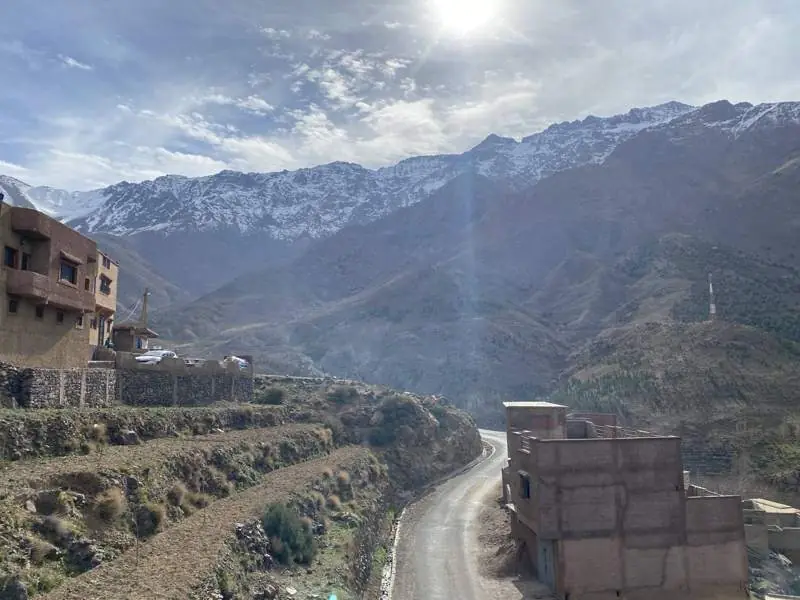
Imlil sits at about 1,800 m, so the weather is very different from Marrakech. Summers are much fresher, winters are cold and often snowy. Each season has its own charm — here's what to expect.
Spring (March–May): blossom and green valleys
Spring is when the valley comes alive. Cherry and apple trees blossom, the fields turn bright green and the rivers are full of snowmelt. Days are pleasant for walking, while nights are still cool. Early in spring there can still be snow high up, so Toubkal may need winter equipment.
Summer (June–August): the trekking season
When Marrakech gets very hot, Imlil is a cool escape. Toubkal is usually snow-free, the days are long and all trails are open. Late May and June bring cherry season — a lovely time to be in the valley. Afternoon thunderstorms can happen in the mountains, so start hikes early.
Autumn (September–November): clear skies and golden colours
Many guides say autumn is the best time of all. The air is clear, temperatures are comfortable, the walnut harvest begins and the trails are quieter than in summer. By November it gets colder and the first snow can arrive on the peaks.
Winter (December–February): snow and fireside evenings
Winter turns the Atlas white. Toubkal becomes a proper winter ascent that needs crampons, an ice axe and an experienced guide, but the lower valley walks are still beautiful on sunny days. Evenings are cold — our rooms all have heating, and there's nothing better than a hot tagine after a day in the snow.
Our verdict
- Best for Toubkal: June to October.
- Best for photos and blossom: April and May.
- Best for quiet trails: September and October.
- Best for snow and a cosy break: December to February.
Whatever the season, we're open every day of the year. Check availability — and remember the 20% direct-booking discount in 2026.